
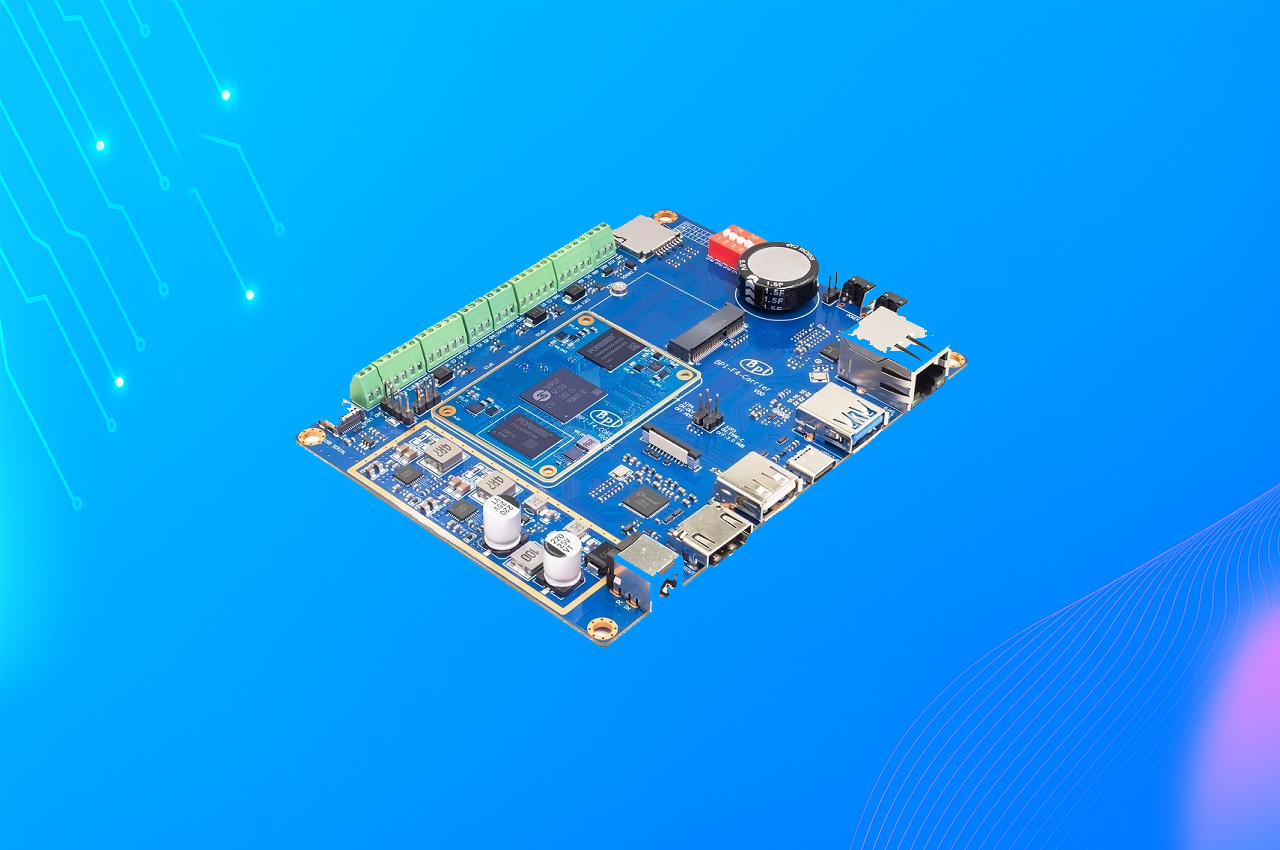
Banana Pi has introduced the BPI-F4, an open-source industrial control board powered by the Sunplus SP7350 SoC, featuring a quad-core ARM Cortex-A55 CPU at 1.8GHz, an ARM Cortex-M4 MCU, and a 4.1 TOPS NPU for edge AI workloads. The 12nm SoC targets AI vision applications and supports frameworks such as TensorFlow, PyTorch, TFLite, Caffe, DarkNet, and ONNX, along with over 50 AI models, including YOLOv5/v8/v10.
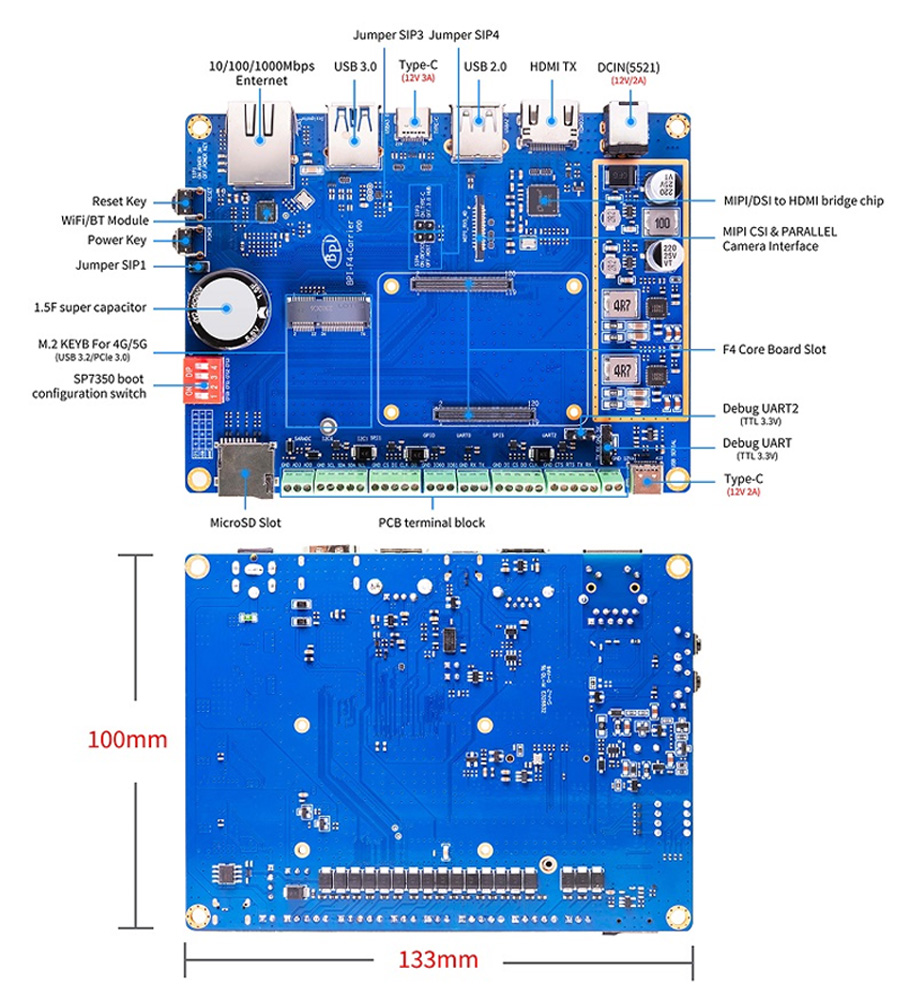
The board is equipped with 4GB LPDDR4, 32GB eMMC, a microSD slot, and a Gigabit Ethernet port. I/O options include USB 3.0 Type-A and Type-C (shared controller), USB 2.0, HDMI output (up to 1080p), and a camera interface (e.g., OV5647, up to 1080p@30fps). A 12V/2A DC input powers the board, with a supercapacitor for RTC backup, and essential control buttons like Reset, Wake, and Boot configuration switches.
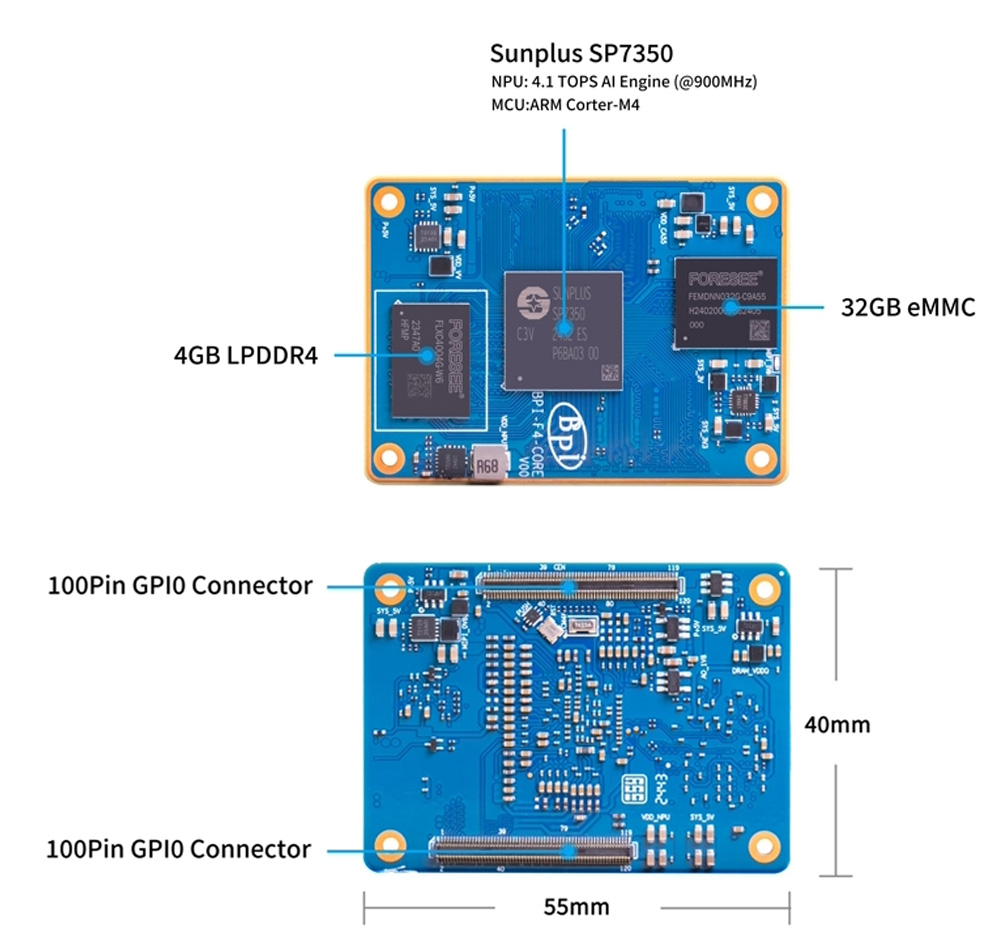
The BPI-F4 measures 134 x 101 mm (mainboard) and 40 x 55 mm (core board). Target applications include AMR robots, drones, smart cameras, ADAS/DMS, and industrial AIoT systems.
For reference, you can check out the Jetway’s MTX-TWL1, an industrial board written by one of my fellow writer previously.
Key specs:
- SoC: Sunplus SP7350, Quad ARM Cortex-A55 @ 1.8GHz + Cortex-M4 MCU @ 1.1GHz
- NPU: 4.1 TOPS AI processor @ 900MHz
- RAM/Storage: 4GB LPDDR4, 32GB eMMC, microSD slot
- Networking: 1x GbE
- USB: 1x USB 3.0 Type-A, 1x USB 3.0 Type-C (shared), 1x USB 2.0, debug USB-C
- Video: HDMI up to 1080p
- Camera: OV5647 support, 1080p@30fps
- Power: 12V/2A DC, supercapacitor RTC backup
- Dimensions: 134 x 101 mm (mainboard), 40 x 55 mm (core board)
The Banana Pi BPI-F4 runs Linux, with official Ubuntu 24.04 XFCE images provided by Banana Pi, built on the Linux 6.6.47 kernel and including drivers, SDK, and AI toolchain support.
So currently, the BPI-F4 is available internationally through online marketplaces like AliExpress and specialised stores like Youyeetoo, with prices ranging roughly between $68 and $75 USD, depending on discounts and bundle options. For more information, you may visit the official product page.
Images used courtesy of Banana Pi.