
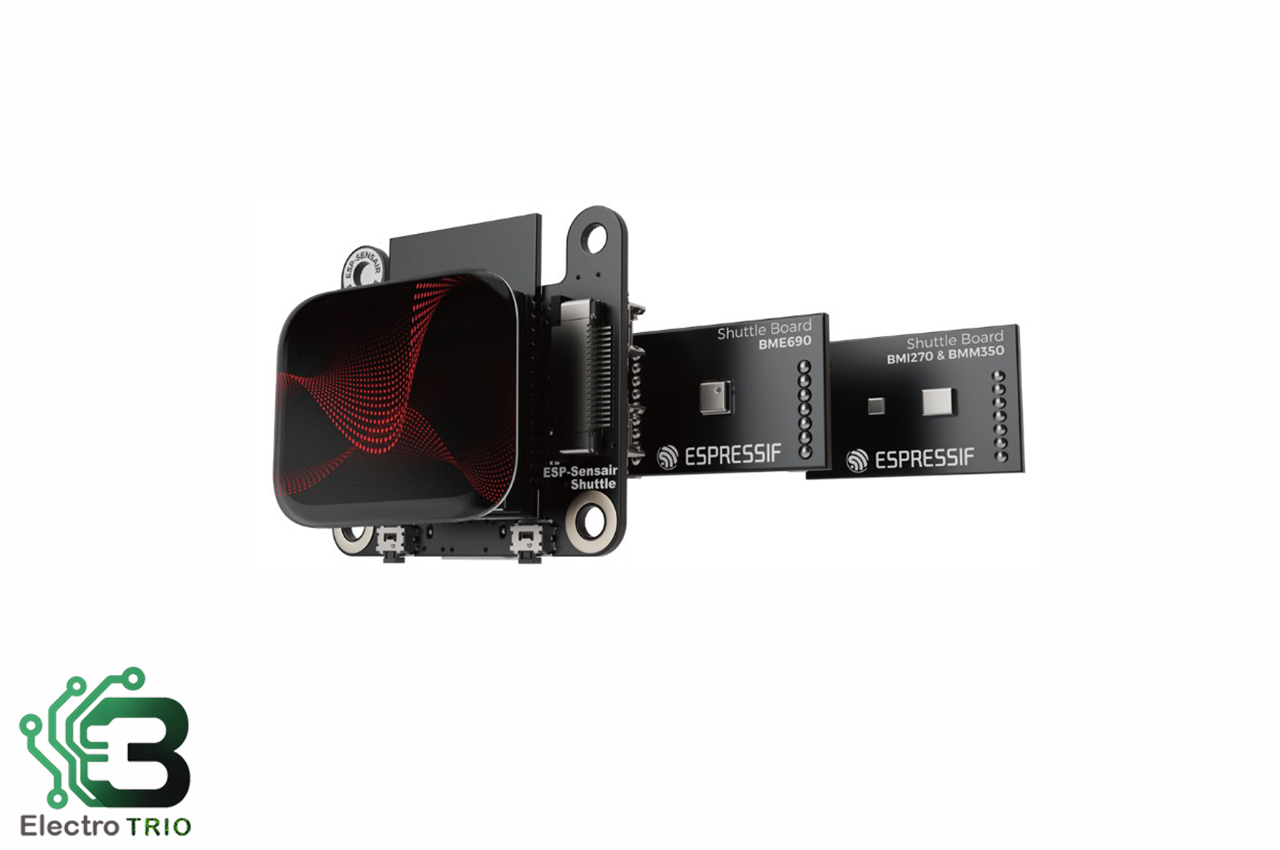
Espressif Systems and Bosch Sensortec have jointly introduced the ESP-SensairShuttle development board to demonstrate deep integration of multimodal sensing and intelligent human–computer interaction, including LLM-based use cases. The platform is built around Espressif’s ESP32-C5 wireless SoC family and targets common applications such as smart offices, smart homes, sports and health devices, and AI toys.
At the core of the kit is the ESP-SensairShuttle mainboard based on the ESP32-C5-WROOM-1-N16R8 module, which integrates 16 MB SPI flash and 8 MB PSRAM. The ESP32-C5 combines a single-core 32-bit RISC-V application CPU running up to 240 MHz with an additional low-power RISC-V core at 40 MHz for energy-sensitive tasks. Connectivity includes Bluetooth 5 LE (with Mesh), dual-band 2.4 GHz and 5 GHz Wi-Fi 6 with backward compatibility, and an 802.15.4 radio for Zigbee and Thread-class stacks. For local interaction, the board integrates a 1.83-inch touchscreen display with a 240 × 284 resolution, driven by an ST7789P3 controller over a 4-wire SPI interface.
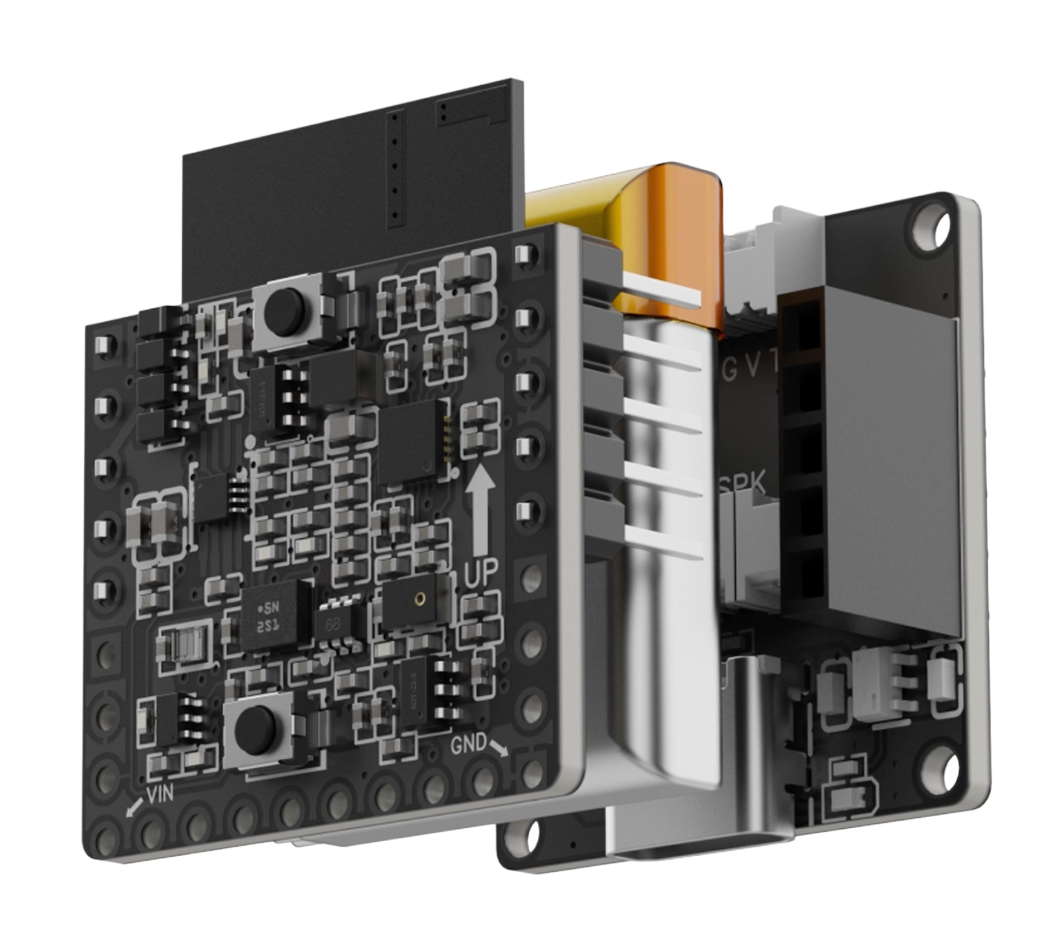
The system supports interchangeable Shuttle sensor daughterboards to enable flexible, multi-dimensional sensing. Espressif officially supports the ShuttleBoard-BME690, based on Bosch’s BME690 environmental sensor providing temperature, humidity, pressure, and gas sensing, and the ShuttleBoard-BMI270 & BMM350, which combines a BMI270 IMU with a BMM350 magnetometer. Together, these options enable air-quality monitoring, gesture and motion detection, orientation tracking, and magnetic field sensing, making the ESP-SensairShuttle suitable for teaching demonstrations, algorithm validation, and rapid multi-scenario prototype development.
We’ve previously covered several ESP32-based development boards, including the M5StickS3 mini dev kit, Seeed Studio XIAO ESP32-C5, M5Stack NanoH2 Dev Kit, and the LILYGO T-Dongle-C5, among others. If you’re exploring ESP32 platforms or comparing form factors and features, those boards are worth checking out.
ESP-SensairShuttle kit content and specifications:
The ESP-SensairShuttle mainboard is built around the ESP32-C5-WROOM-1-N16R8 module, based on the Espressif Systems ESP32-C5 SoC. It features a single-core 32-bit RISC-V CPU running up to 240 MHz, paired with a low-power RISC-V core at 40 MHz for power-sensitive tasks. On-chip resources include 384 KB SRAM and 320 KB ROM, while external memory consists of 8 MB PSRAM and 16 MB SPI flash. Wireless capabilities cover dual-band 2.4/5 GHz Wi-Fi 6 with Wi-Fi 4 backward compatibility, Bluetooth 5.0 LE with Mesh support, and an 802.15.4 radio supporting Zigbee 3.0, Thread 1.3, and Matter. The board uses a PCB antenna and supports Station, SoftAP, SoftAP+Station, and promiscuous Wi-Fi modes.
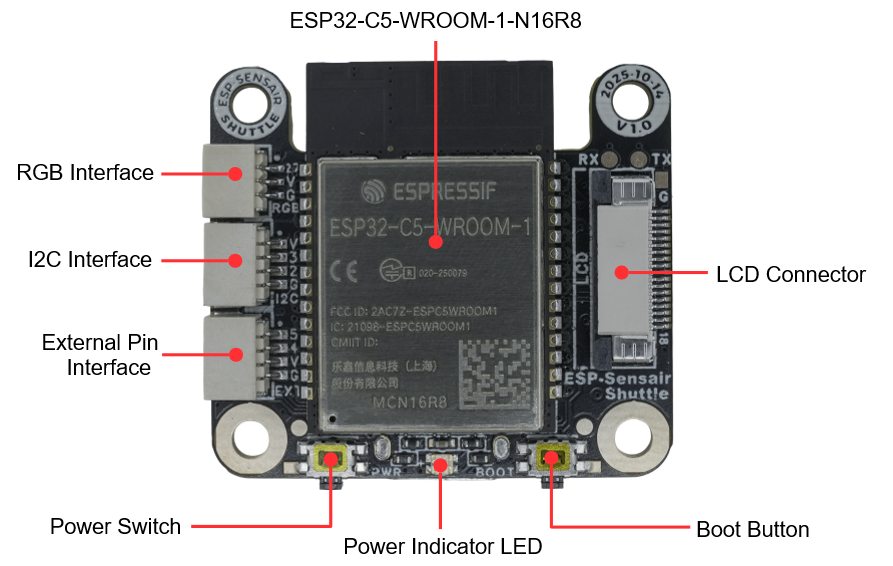
SensairShuttle-Mainboard PCB Front View
For interaction and I/O, the mainboard integrates a 1.83-inch touchscreen display with a 284 × 240 resolution, driven by an ST7789P3 controller over a 4-line SPI interface. Audio support is provided via 2-wire connectors for an external analog microphone and speaker. A USB-C port handles power, charging, programming, and debugging. Sensor expansion is enabled through 9-pin and 7-pin 1.27 mm female headers for Shuttle sensor boards, along with additional expansion options such as a 4-pin GPIO interface, a 4-pin external I2C interface, and a 3-pin RGB LED strip connector compatible with WS2812 and similar LEDs. Other onboard features include a power switch, Boot button, and power LED.
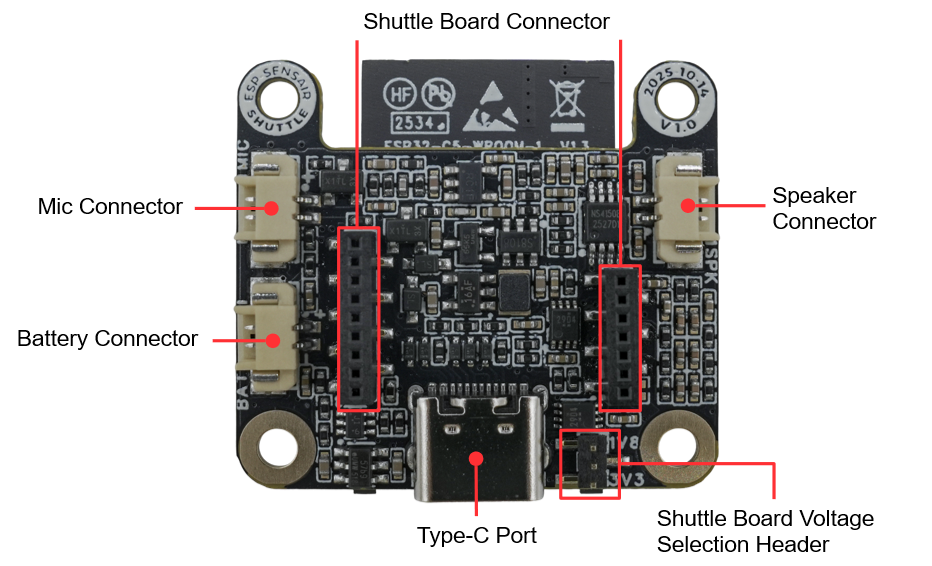
SensairShuttle-Mainboard PCB Back View
Power can be supplied via 5 V over USB-C or through a 3.7 V lithium battery using a 2-pin connector. The supported sensor daughterboards include the ShuttleBoard-BME690, based on the Bosch Sensortec BME690 gas sensor, which provides temperature, humidity, pressure, and gas resistance sensing over I2C or SPI. The ShuttleBoard-BMI270 & BMM350 combines the Bosch BMI270 IMU for three-axis acceleration and angular velocity sensing (I2C/SPI) with the Bosch BMM350 magnetometer for three-axis magnetic field measurement via I2C, enabling motion, orientation, and environmental sensing on a single modular platform.
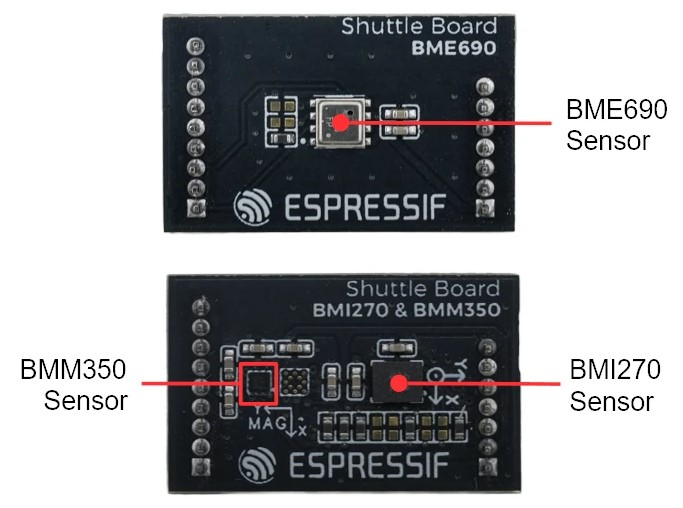
BME690 and BMI270+BMM350 Shuttle Boards
The documentation is heavy bias toward hardware without much meaningful software information, which makes it forceful to go to GitHub search to find ESP-IDF components and factory firmware for the kit. A brief look at the code reveals that currently the firmware supports the BME690 and the BMI270 + BMM350 Shuttle Boards: With the BME690, the LCD displays the information of temperature and humidity, pressure and gas resistance, while the BMI270 + BMM350 is only limited to showing basic information of the status of the sensors, not full motion or magnetic field information.
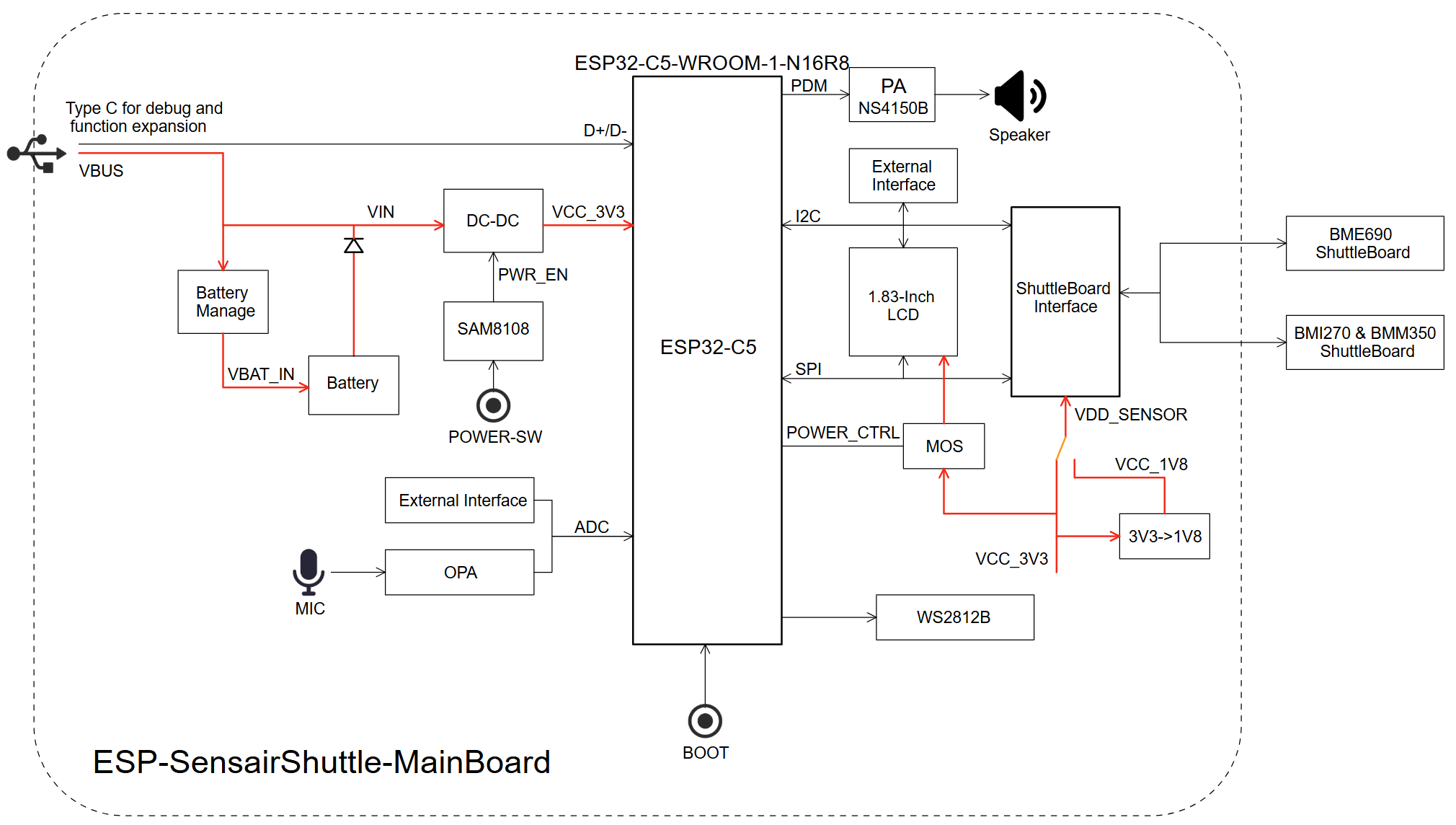
ESP-SensairShuttle Function Block Diagram
The ESP-SensairShuttle kit is available for purchase on AliExpress for $55.88 plus shipping.
 Niladri Chowdhury
  Debashis Das