
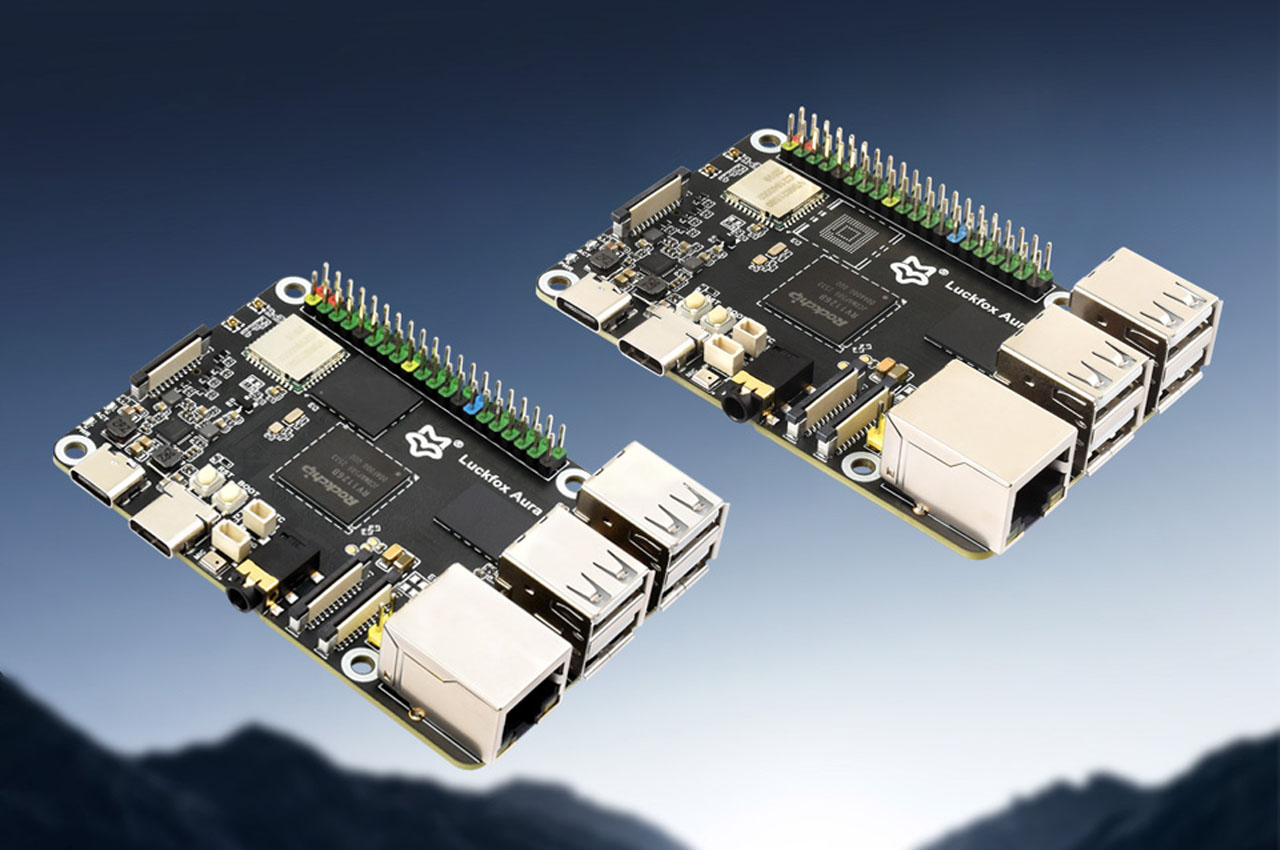
Luckfox Aura is a high-performance single-board computer (SBC) targeted at developers, makers and hobbyists requiring a small but functional Linux-based development platform with edge computing, AI vision, multimedia and other embedded applications. It belongs to the Luckfox family of development boards and modules, and it is unique in terms of the combination of performance, connectivity and expandability.
Luckfox previously introduced the PicoKVM Base, a compact and affordable IP KVM device designed for remote PC, server, and development board management. You can check it out for reference.
Core Features and Performance
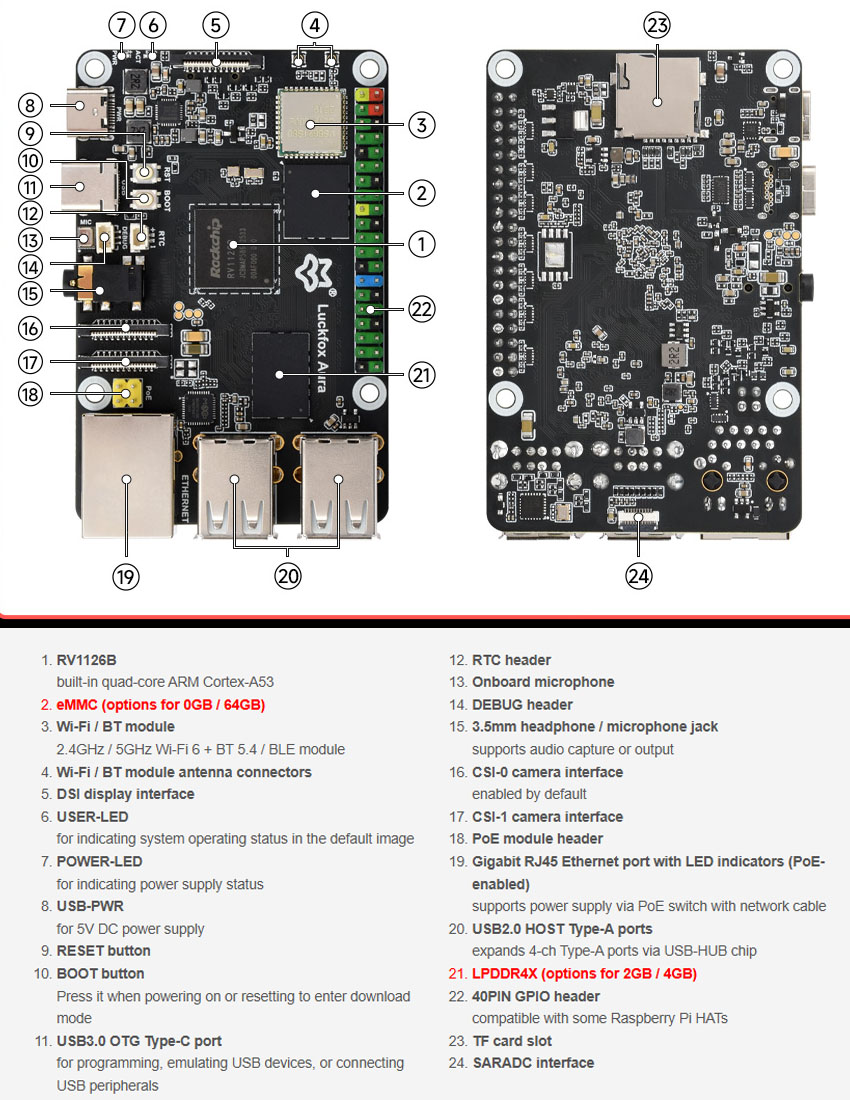
The Luckfox Aura is based on the Rockchip RV1126B system-on-chip (SOC) with the ARM Cortex-A53 processor that is capable of running in up to 1.6 GHz with four cores. The chipset not only offers excellent general-purpose computing, but also contains an integrated Neural Processing Unit (NPU), which can have 3 TOPS of AI computing processing capacity to implement machine learning models on the chip.
This renders the Aura appropriate to be called into action in such assignments as the vision of computers, object recognition, and other platforms that need the help of AI without having to outsource processing to a cloud server. The board also allows 4K video encoding and decoding, and therefore, it could also be useful in multimedia applications.
Memory, Storage and Expandability
It has 2 GB -4GB LPDDR4X RAM choices and may have optional 64 GB eMMC storage. It has a microSD card capacity, which provides some flexibility in storage options to enable developers to load different Linux versions or change projects with ease.
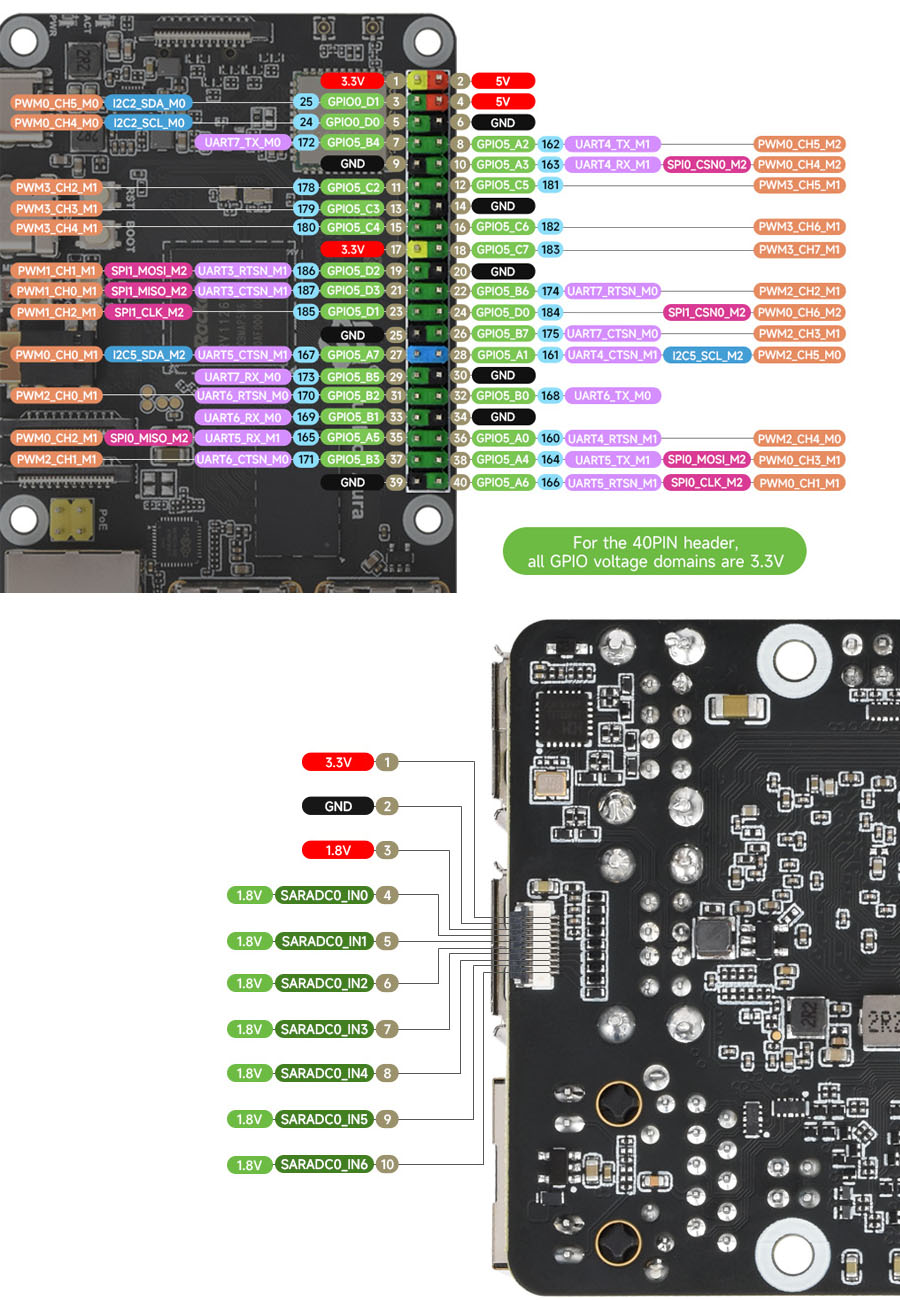
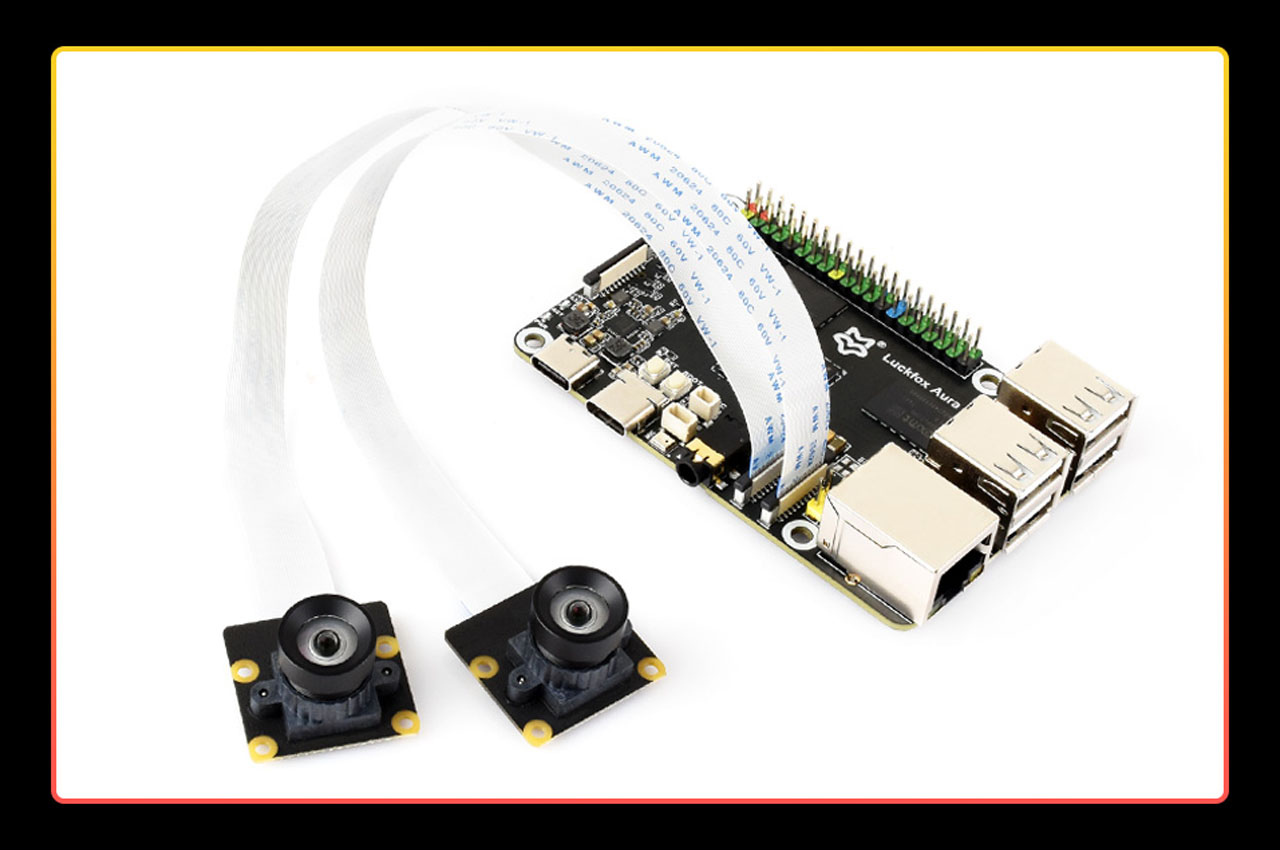
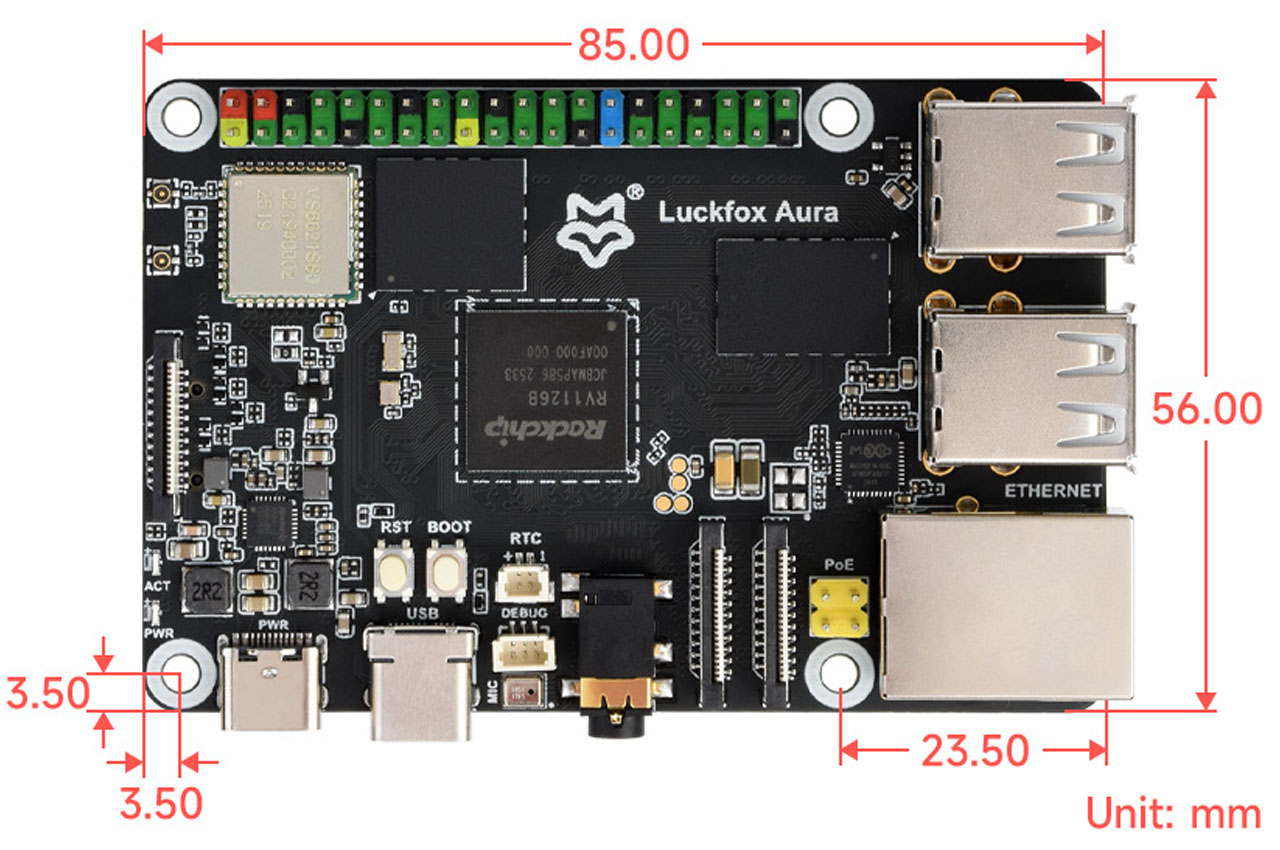
To support expansion and connecting the peripherals, the board has a 40-pin GPIO header which is partially compatible with the Raspberry Pi HATs, allowing the use of existing accessories and add-ons. It also has dual MIPI CSI camera interfaces, an MIPI DSI display connector, and is, therefore, well-suited to imaging projects.
Connectivity and I/O Options
Connectivity is well-covered on the Aura. It offers:
- Gigafinetethernet, optionally powered over Ethernet (POE).
- Wi-Fi 6 dual band and Bluetooth 5.4/BLE.
- USB 3.0 OTG, along with several USB 2.0 host ports.
- Multimedia/Audio in/out and onboard microphone.
These features provide developers with numerous options to interface with networks, sensors, displays and any other hardware, be it robotics or smart devices or even IoT gateways.
Software and Ecosystem Support
Although official software support documentation is yet to be released by the Luckfox team, Linux distributions like Ubuntu or Debian may be used on the Aura with the use of Rockchip Linux SDK. In the case of AI development, AI connection tools such as RKNN-Toolkit assist in rewriting and optimising models across such popular frameworks as TensorFlow, PyTorch and ONNX to run on the NPU on the board.
Use Cases and Applications
The Luckfox Aura is ideal for:
- AI vision systems and smart cameras
- Edge computing in robotics and automation
- Multimedia processing and streaming projects
- Linux-based embedded applications needing strong connectivity and performance
Generally, the Aura integrates high-performance hardware in a small package and gives developers flexibility and high performance to build modern AI and embedded applications.
Price and Availability
Currently, the Luckfox Aura Linux development board can be purchased online and usually has a price between $52.99 and $79.99 based on your memory and storage choices (i.e. 2 GB or 4 GB RAM, but optional 64 GB eMMC), with the entry-level model retailing at about $52.99. It is in stock on the official Luckfox store and can be ordered directly from Waveshare and AliExpress, though exact regional availability and shipping may vary. If you’re buying from India or other countries, prices could be higher after shipping and taxes.