
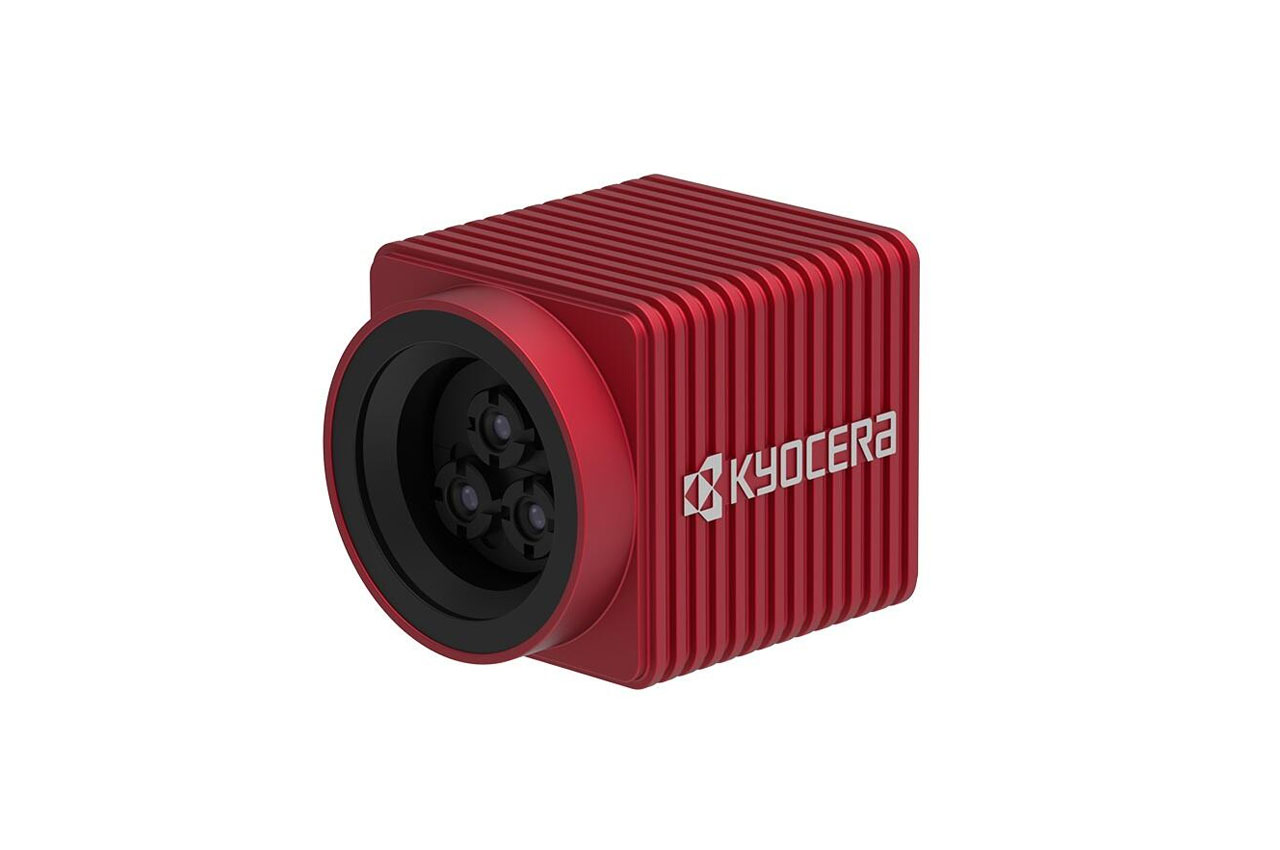
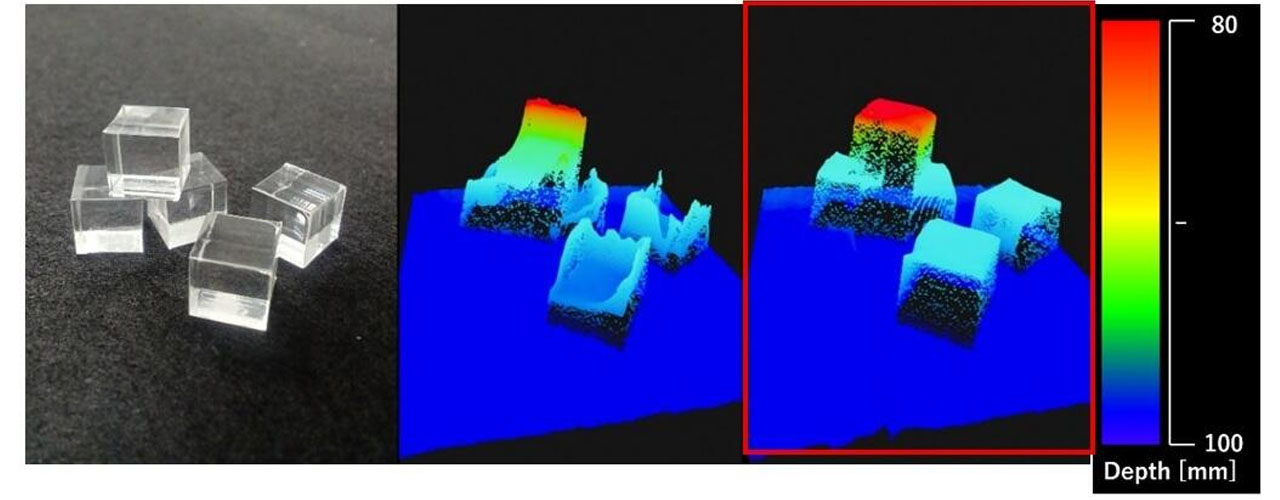
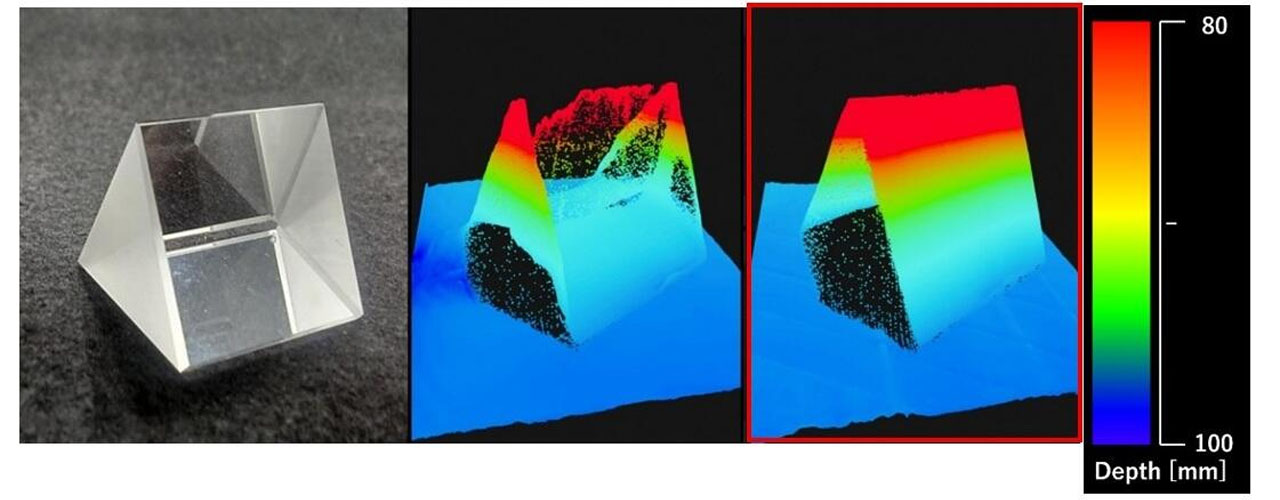
Kyocera has announced a major advance in imaging technology with its new Triple Lens AI-Based High-Resolution Depth Sensor for Close Imaging. This fresh sensor brings a three-lens configuration plus proprietary AI to dramatically improve object detection and depth measurement, especially for hard-to-see items like thin wires, transparent plastics or reflective metals.
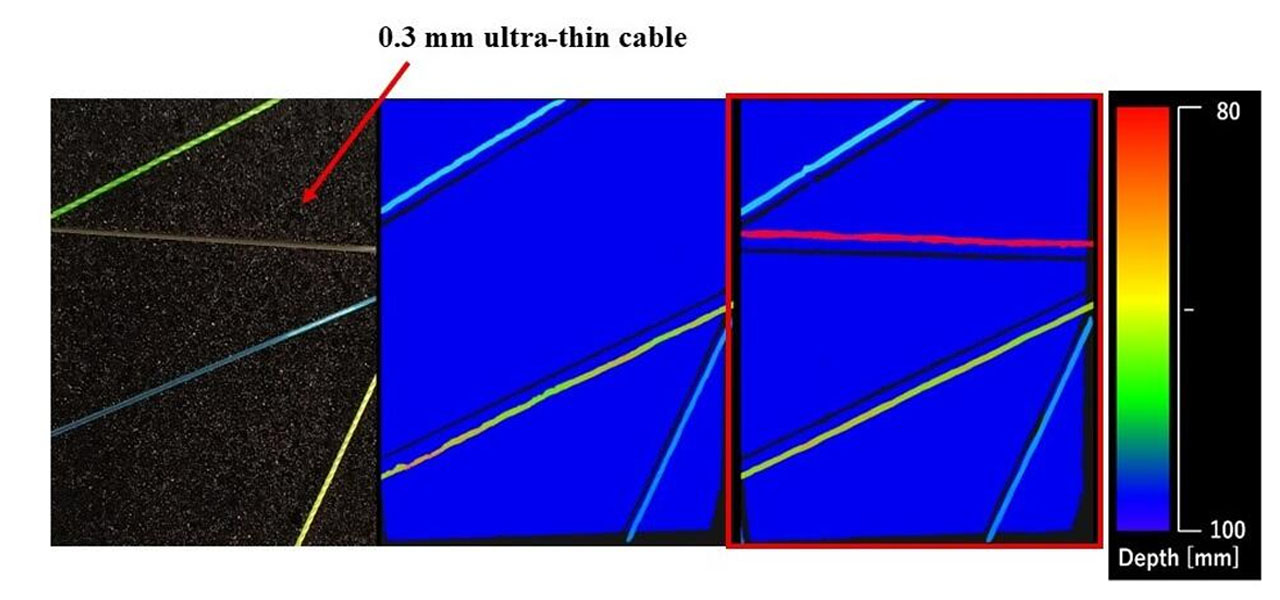
The sensor uses three lenses to capture multiple sets of parallax information, “left-centre”, “centre-right” and “left-right”, at a close working distance (about 10 cm). This provides it with a far superior capability to determine and quantify objects with smooth surface features or in difficult circumstances in which conventional dual-lens stereo cameras fail. Kyocera claims that under this setup, they have managed to make superior detections of objects with a minimum diameter of 0.3 mm (once they could detect an object with a diameter of 1 mm), even where that object is translucent, thin or overlapping.
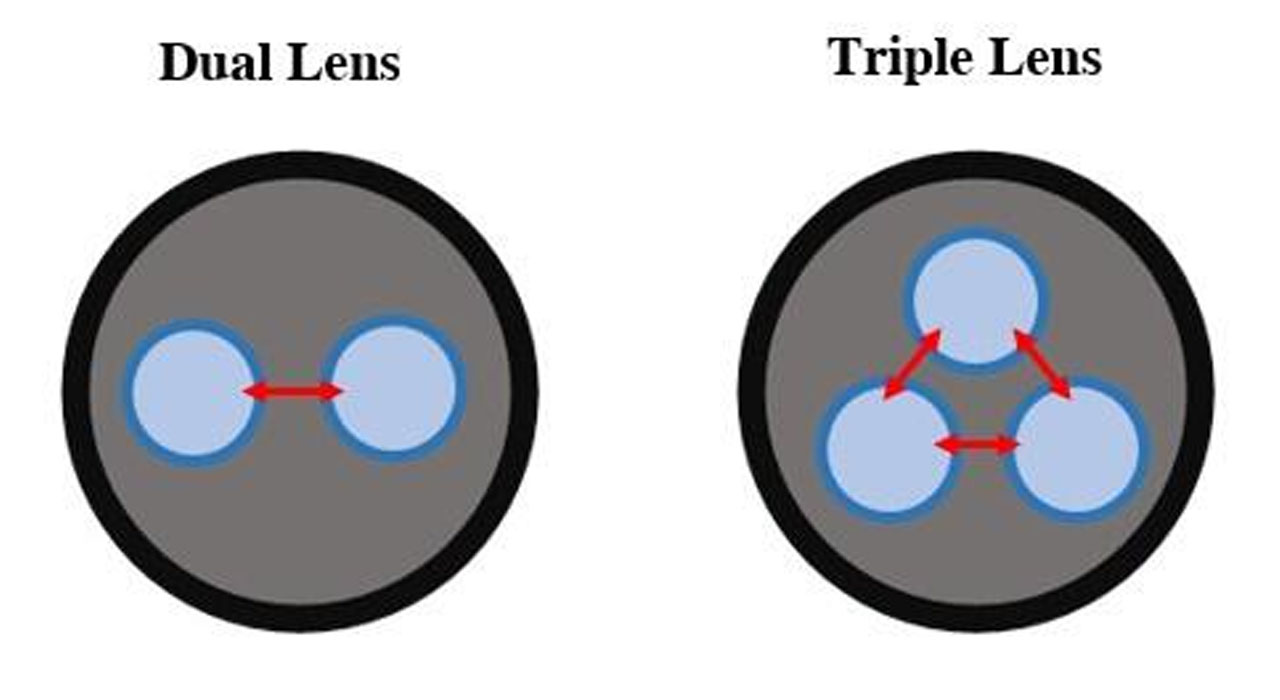
The sensor itself is not that massive: it is 28 mm x 30 mm x 40 mm. It is designed to be employed in extreme conditions. There are three spheres of technology, which will result in a considerable change, and Kyocera identifies them:
- Inspection in manufacturing: In factories, many items have repeating patterns, small wires or transparent components where conventional cameras often mismatch or lose accuracy. The triple lens sensor helps reduce such errors and improves reliability.
- Surgical robots: In medical or surgical applications, thin tools, needles or sutures can be difficult to locate reliably because of reflections or overlapping parts. This sensor’s multiple viewpoints help recognise those instruments more accurately.
- Agricultural robots: In fields or orchards, leaves, fruits and branches often block each other or overlap. The advanced depth sensing helps robots recognise and pick produce with fewer blind spots.
Kyocera developed this new sensor against the backdrop of labour shortages and the growing need for automation and vision systems that can substitute for human eyes. They had already introduced a dual-lens AI-based depth sensor with about 100 µm resolution at a 10 cm range, but recognised its limitations in challenging object geometries, hence the move to a triple-lens design to broaden capability.
The sensor includes the Kyocera Corporation’s proprietary AI software that uses three lenses to scan tiny, thin, or even opaque objects with high precision, and the sensor also supports calibration routines and APIs, simple integration with automation, manufacturing, or robot-vision systems. For your reference, you can check out the NeoEyes NE301, the Insta360 GO Ultra, and the DFRobot HUSKYLENS 2.
In its future outlook, the company will demonstrate this technology at CES 2026 in Las Vegas and other sensors and imaging innovations. The push of Kyocera demonstrates that depth sensing and AI are becoming more important in industrial automation, medical automation, and agricultural automation. Not having been transferred to the commercial market yet, Kyocera does not provide any information on the pricing yet, nor does it have a page for its product, nor can it be found on any page of its distributor. When it is finally demonstrated properly and Kyocera opens its preparation to put it into industrial use, more information about cost and availability will be available.