
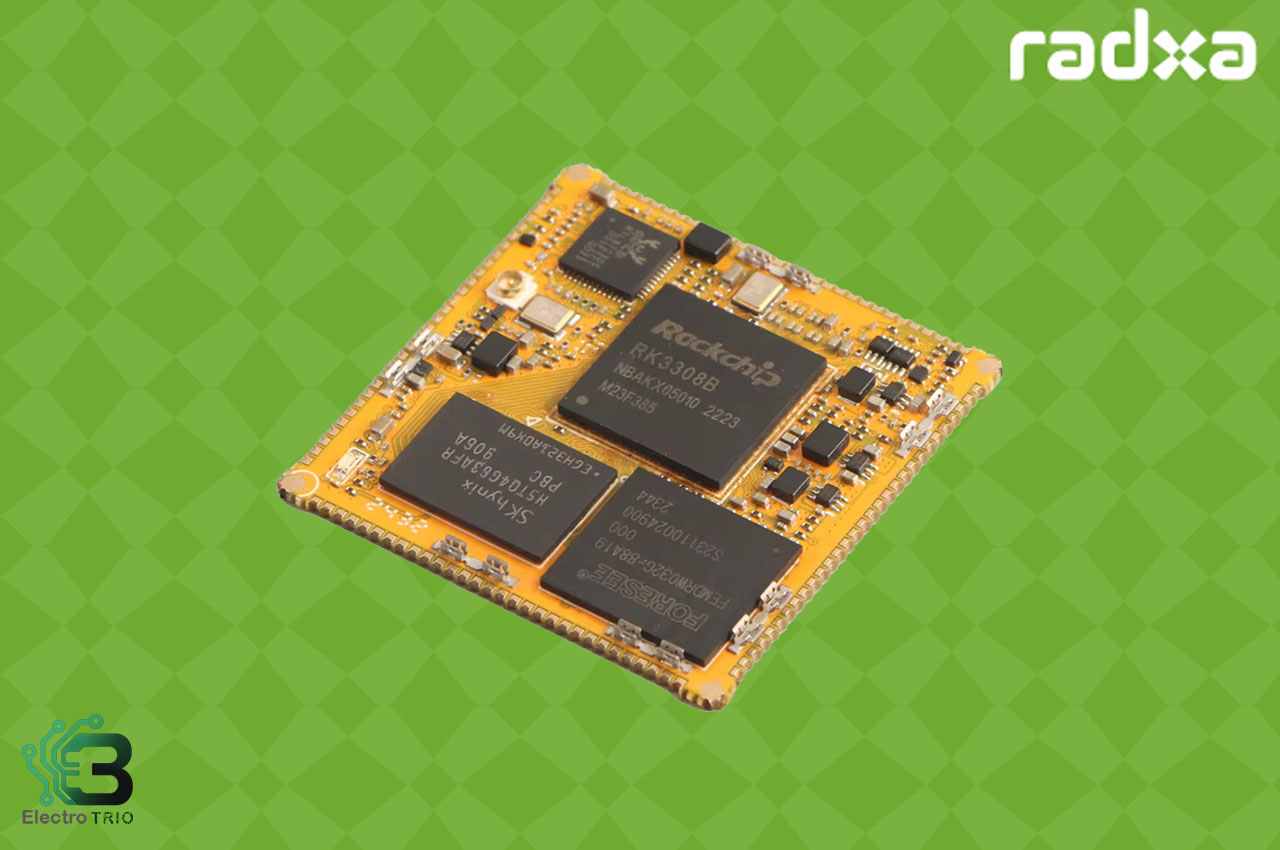
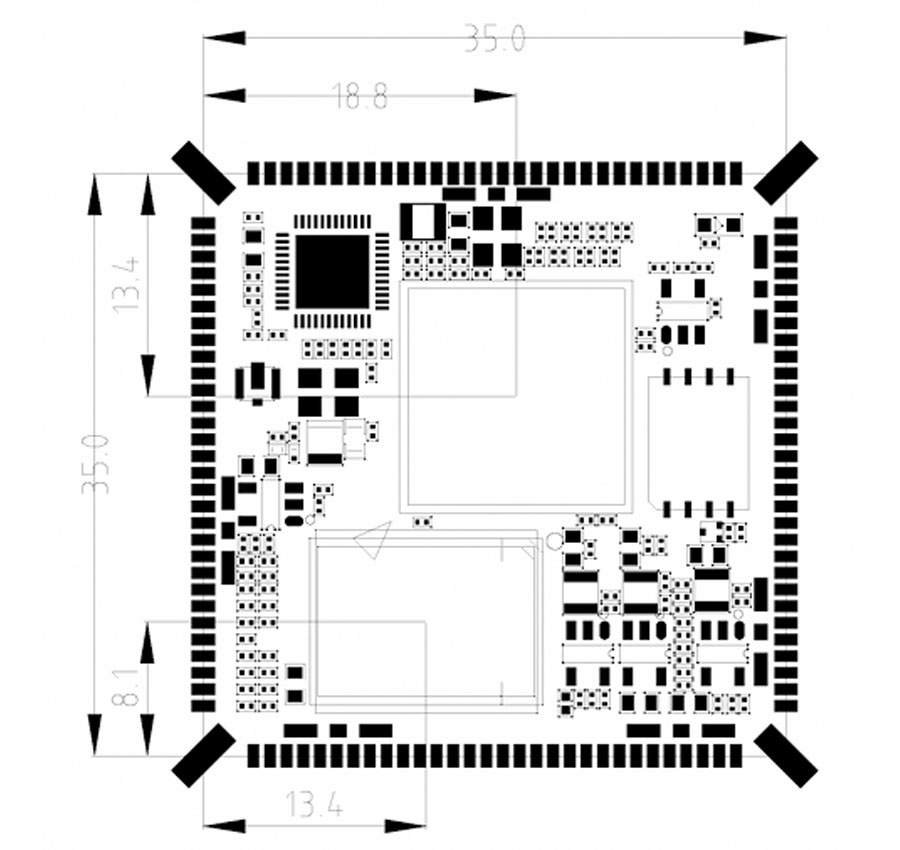
The new Radxa rCore-RK3308 is simply a tiny and compact System-on-Module (SoM) created and packaged to be implemented in the embedded systems demanding low power consumption, wireless data transfer and predictable functionality. It is also founded on a processor called Rockchip RK3308B, a 4-core ARM Cortex-A35 (supports ARMv8-A). It is based upon the NEON SIMD, dual-precision FPU, and TrustZone security features. Such a combination allows the module to be sufficient to undertake different IoT applications, voice-based customs and small-sized industrial workloads without becoming power-hungry. The greatest strength of rCore-RK3308 is its small size of 35 mm x 35 mm, which is very small and can be fitted in compact designs of products where space is limited.
Previously, Radxa introduced some of its products, including the Dragon Q6A SBC, the Orion O6N Nano-ITX SBC, the Cubie A7A, and many more. Feel free to check those out for your future reference.
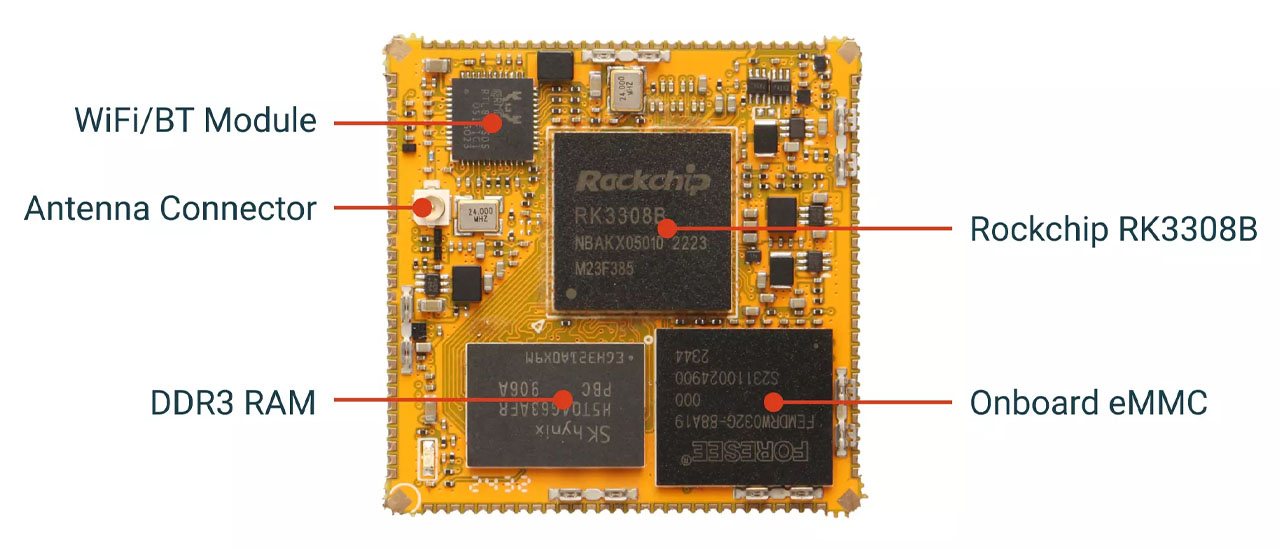
It has a flexible memory hypothesis, allowing 256 MB or 512MB RAM, which offers sufficient headroom to embedded Linux and voice-processing undertakings. Storage will take up an onboard eMMC of between 8 GB to 128 GB and a microSD slot with a capacity of up to 128GB. This will give a number of options available to the developers, depending on the requirements of their application. The Realtek RTL8723DS chipset provides integrated Wi-Fi 802.11 a/b/g/n and Bluetooth 2.1/4.2 integration into the module, and therefore, it becomes easier to develop integrated wireless devices without going any further to install an external wireless module. Having 120 pins, an expansion connector provides a tremendous amount of I/O accessibility, such that the developers can interface with displays, sensors, industrial equipment, and other external peripherals.
The Radxa rCore-RK3308 is able to run both Buildroot and Debian-based operating systems, and it provides a typical and stable platform on which one can run their IoT and voice applications. It has support of Rockchip SDK plus necessary drivers, tools, so that interfaces are very easy to access, such as GPIO, I2C, SPI, UART, and audio components. Radxa also offers documentation and community services, which make the development easier and easier to follow for a beginner.
All in all, the rCore-RK3308 is unique since it is a combination of performance, connectivity and flexibility in a very small area. It can be used not only in the edge devices of the IoT, but also in the projects using the voice assistants, smart speakers, and other audio products due to its balance of low power consumption and a decent processing unit. They possess a built-in wireless support that will not introduce the extra challenging aspect of designing, especially in the context of consumer and commercial IoT. Radxa also has very good documentation together with a community, and it is worthwhile for developers who require help on how to proceed or require accelerating their development process.
The Radxa rCore-RK 3308 is not currently listed on the menu of prices on the Radxa site in terms of purchases; however, it is purchased via authorised distributors like AliExpress, and the budget prices of analogous modules based on RK3308 are around $11-$14, depending on the RAM and wireless capabilities. In India, some versions with 512 MB RAM and built-in storage are listed by resellers for around ₹3,400–₹4,000, though stock levels are often limited. Radxa guarantees long-term availability of the rCore-RK3308 until September 2033, and units can be purchased through Radxa’s authorised partners or regional electronics suppliers when in stock.