
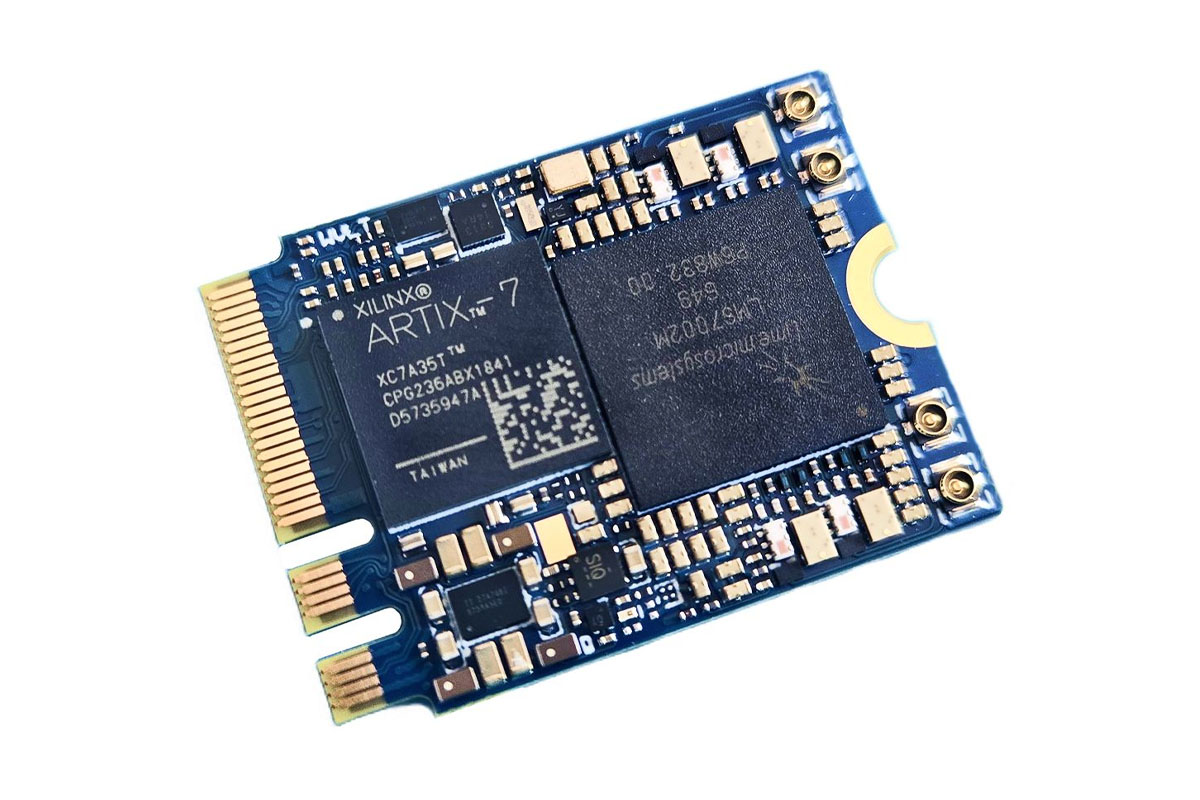
The xSDR from Wavelet Lab is a compact M.2 software-defined radio module designed to bring serious RF capability into extremely small devices. Instead of being a bulky external USB radio, this board fits directly inside a computer like a Wi-Fi card using an M.2 2230 A+E-key slot. The idea is straightforward: provide laboratory-quality radio operation and eliminate the complexity of setups and cables.
Essentially, xSDR is a 2x2x MIMO transceiver with a frequency range of 30 MHz to 3.8 GHz, which can be used in IoT and ISM frequency bands, cellular networks, and much more. It has support of sample rates up to 122.88 MSPS and flexibly employs an AMD Artix-7 FPGA with the LMS7002M RF transceiver chip.
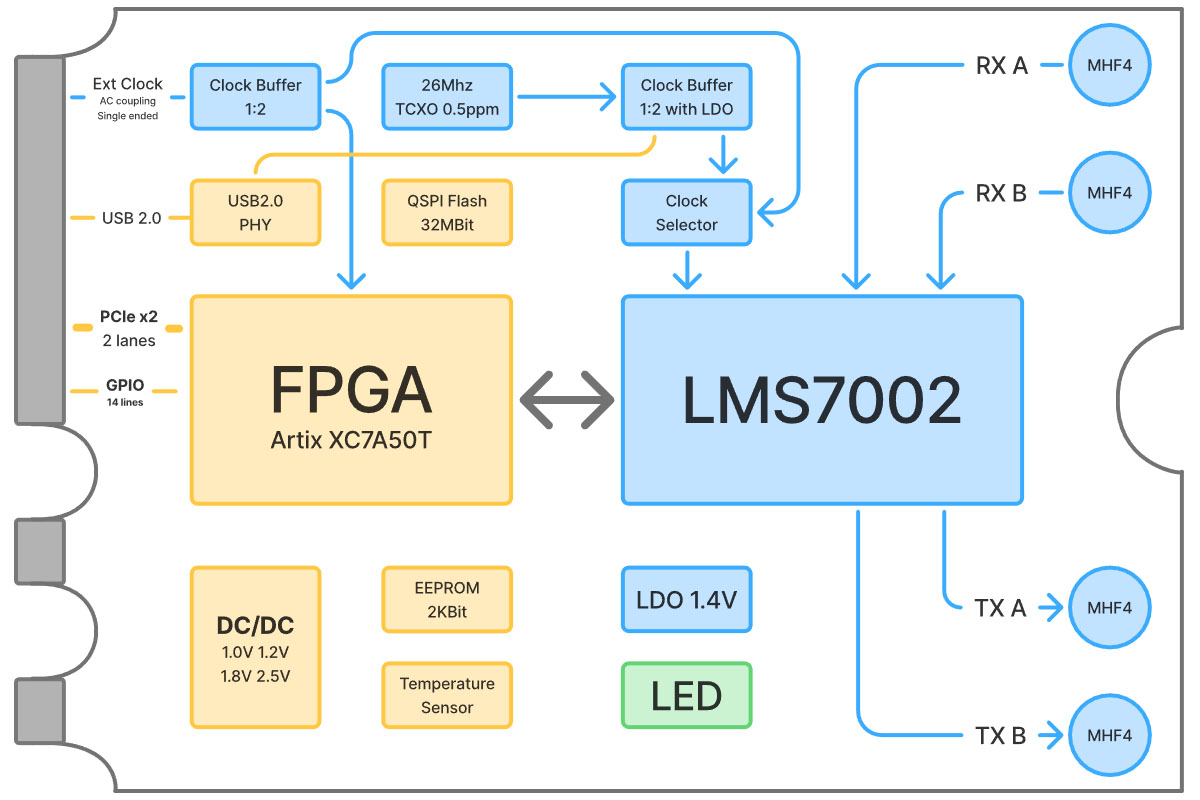
Hardware Overview
The most notable feature is its size, which is 30mm X 22mm, so that any laptops, tablets, edge computers, or embedded systems can acquire the full scalability of SDR internally.
Key hardware features:
- 2× RX and 2× TX channels (full MIMO)
- 30 MHz – 3.8 GHz tuning range
- Up to 90 MHz channel bandwidth
- PCIe 2.0 ×2 and USB 2.0 host interface
- External clock synchronisation
- Four MHF4 RF connectors
- 0.5 PPM clock stability
Because multiple boards can synchronise, users can build phase-coherent multi-channel radio arrays for advanced RF experiments.
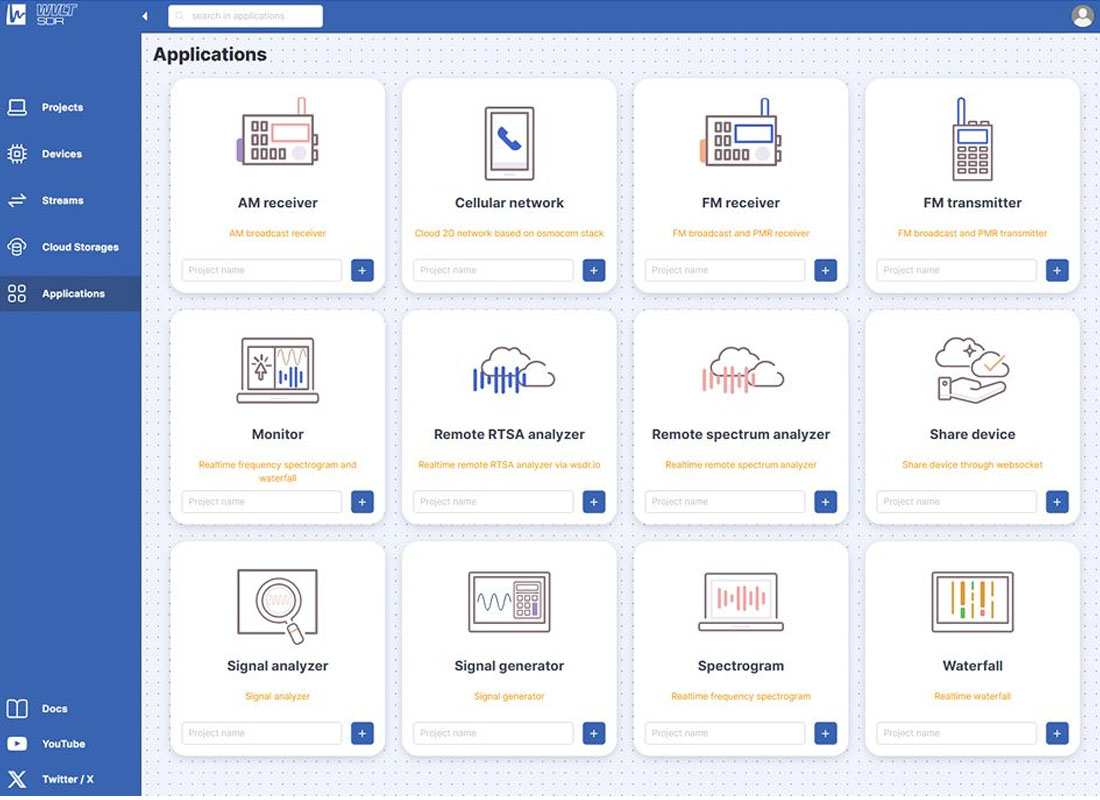
Software and Development Experience
Unlike many SDR platforms that require heavy driver installation, xSDR integrates with a browser-based platform called wsdr.io, letting users create and control RF applications directly from a web interface. It also contributes to a large ecosystem of available tools, such as GNU Radio, SoapySDR, srsRAN, and OsmoBTS. This suits the needs of the novice who needs to experiment with wireless signals as well as the expert who needs to construct LTE or privately-built 5G networks. You can find the host libraries on GitHub.
Typical Applications
xSDR is built for flexibility rather than one specific use case. Common uses include:
- Cellular network development (BTS / LTE / 5G research)
- Embedded RF and spectrum analysis
- Point-to-point wireless data links
- Signal intelligence and monitoring
- Rapid wireless prototyping
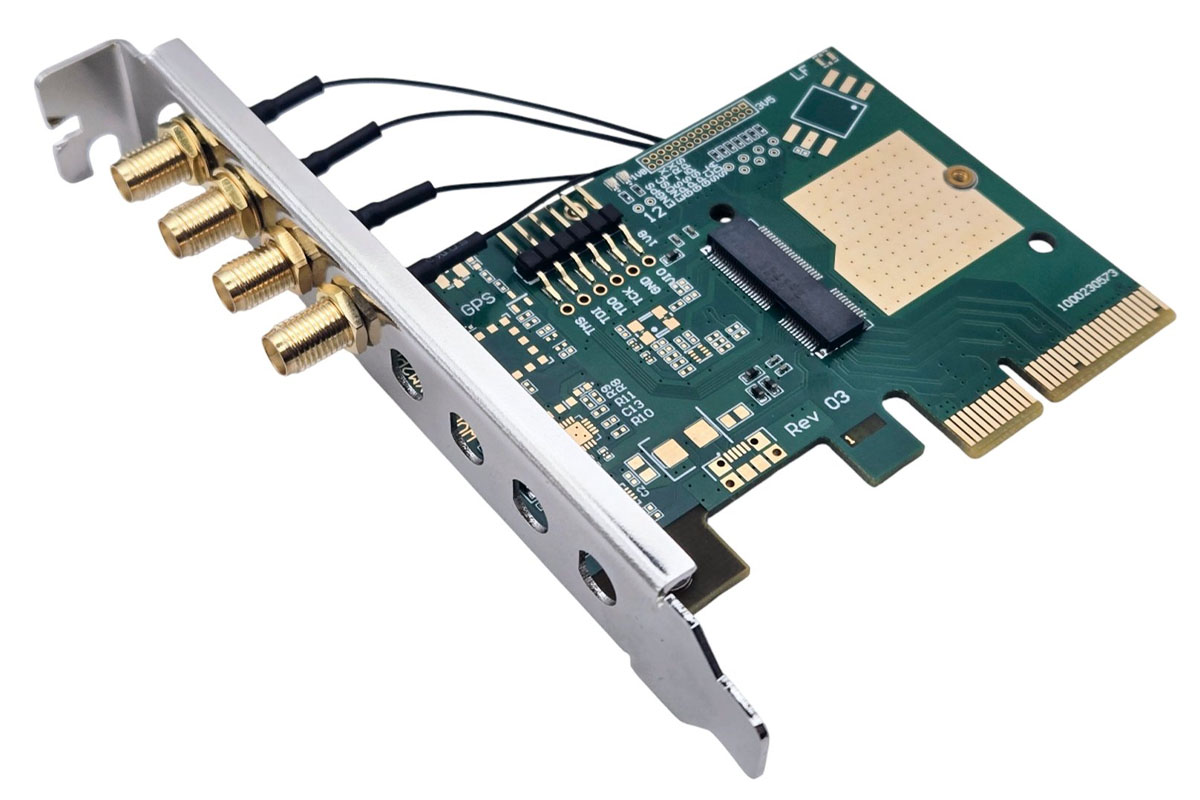
Because it mounts inside a system, it is particularly useful for edge computing and industrial deployments where space and power matter. Additionally, the company also introduced an M.2-to-PCIe breakout board, designed to provide improved integration options and expanded access for xSDR in desktop and embedded systems. This adapter has a PCIe x4 host interface and a JTAG connector exposed, which makes it ideal for custom firmware development.
Price and Availability
As of the time of writing, the M.2 software-defined radio module is priced at $549, and the M.2-to-PCIe breakout board is priced at $89 and will ship on July 15, 2026, after manufacture on Crowd Supply. We have previously covered some products, such as an evaluation board, a dual-screen E-Reader, a networking board, and more, which are sold only on Crowd Supply.